
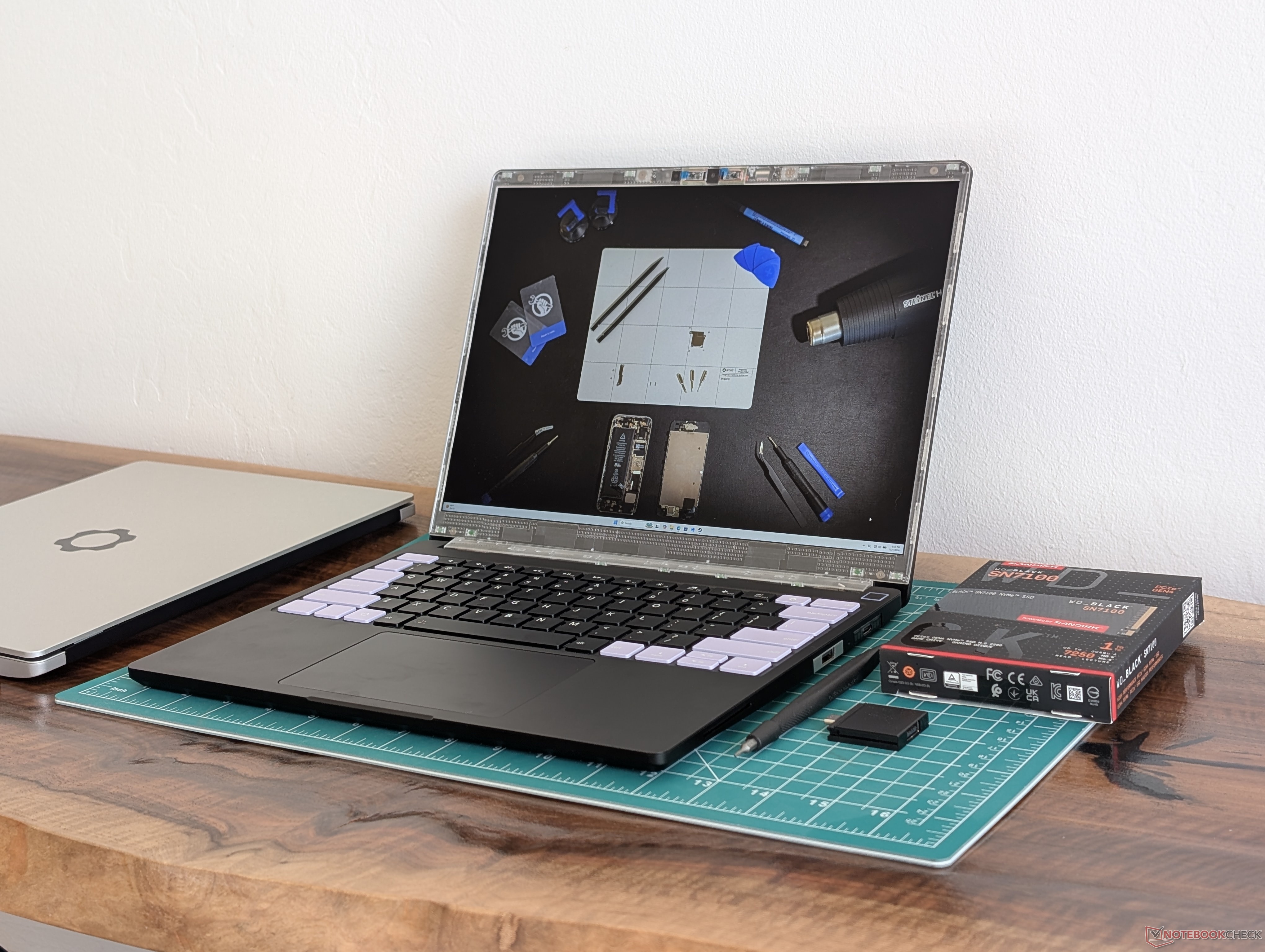
The Framework Laptop 13 Pro arrives as a substantial evolution of the company's modular hardware philosophy. While it maintains the signature swappable port system and repairable architecture that defined its predecessor, the new model features a fully machined 6063 aluminum chassis that reviewers describe as significantly more rigid and premium in hand. This structural upgrade is accompanied by a shift to a haptic trackpad and the inclusion of a 74 Wh battery, a notable increase over the 61 Wh capacity found in previous iterations.
Performance and thermal management remain areas of mixed results. The device is available with either Intel Panther Lake or AMD Ryzen AI 300 processors, but reviewers noted that the compact cooling solution struggles under sustained heavy workloads. Notebookcheck reported that the CPU can reach temperatures exceeding 90 degrees Celsius, which negatively impacts Turbo Boost performance compared to competing ultraportables. Despite these thermal constraints, the laptop is generally praised for its 2880 x 1920 IPS touchscreen, which offers 700 nits of brightness and a 120 Hz refresh rate.
The user experience is largely defined by the trade-off between modularity and convenience. The DIY Edition allows for a hands-on assembly process that is straightforward even for novices, as it requires no thermal paste application or complex wiring. However, the purchasing experience is frequently cited as a major pain point. Framework utilizes a batch-based shipping system that can lead to months-long wait times, and recent volatility in the DRAM market has forced the company to adjust configurations and pricing for pending orders, causing frustration among some customers.
While the Laptop 13 Pro is widely considered the most polished and capable machine Framework has produced, its value proposition is complicated by its price. Configurations start at $1,200 for barebones units but can climb toward $3,000 for fully equipped models. Reviewers emphasize that while the hardware improvements—particularly the battery life and build quality—are genuine, potential buyers must weigh these benefits against the reality of fluctuating costs and the lack of advanced display options like OLED or full DCI-P3 color coverage.